EU-alternatieven voor Amerikaanse techdiensten
Waarom Europese tech-alternatieven strategisch noodzakelijk zijn en het volledig leunen op Amerikaanse infrastructuur een risico is voor B2B en B2C.
Kijk naar de tech stack van vrijwel elk modern Europees bedrijf en je ziet een herkenbaar patroon. Van de cloud-infrastructuur tot de browser waarmee je dit leest; de ruggengraat van ons digitale leven is overweldigend "Made in the USA".
Terwijl de VS decennialang de kunst van het schalen van software heeft geperfectioneerd, beginnen Europese bedrijven een lastige vraag te stellen: Is 100% afhankelijk zijn van een enkel buitenlands rechtsgebied een structureel risico?
De innovatieparadox
Het ligt niet aan een gebrek aan talent. Europa heeft de ingenieurs, de onderzoekers en de "brains". Maar we hebben historisch gezien geworsteld met de "financiële motor". Jarenlang zagen we een brain drain waarbij onze meest veelbelovende oprichters hun bedrijven naar de VS verplaatsten, aangetrokken door diepere kapitaalmarkten en financiële prikkels.
Tot nu toe is het een aanzienlijk pijnpunt geweest dat de EU achterloopt op de VS in productontwikkeling, ondanks de intellectuele capaciteit.
De verschuiving in het geopolitieke klimaat
Tot voor kort werd de dominantie van Amerikaanse tech vooral gezien als een kwestie van gemak en superieure UX. Maar het tij keert. Gezien het huidige financiële beleid van de Amerikaanse overheid is het duidelijker dan ooit dat we niet hoofdzakelijk op Amerikaanse diensten zouden moeten leunen.
Uitsluitend vertrouwen op Amerikaanse diensten voor onze kerninfrastructuur is niet langer slechts een technische keuze; het is een strategische kwetsbaarheid. We zouden niet volledig afhankelijk moeten zijn van een enkele buitenlandse mogendheid voor onze kritieke systemen.
Excellentie vs. onafhankelijkheid
Laten we helder zijn: dit is niet bedoeld om te zeggen dat Amerikaanse producten slecht zijn. Integendeel, Amerikaanse diensten zijn vaak de gouden standaard. Zelfs tijdens het onderzoeken van EU-alternatieven betrap ik mezelf erop dat ik naar Amerikaanse tools grijp, simpelweg omdat ze in veel categorieën gewoon "plain better" zijn dan hun Europese tegenhangers.
Het doel is geen totale boycot, maar juist diversificatie. We hebben een levendig Europees ecosysteem nodig zodat we niet uitsluitend afhankelijk zijn van Amerikaanse diensten voor onze kerninfrastructuur.
Het Europese techlandschap: huidige alternatieven
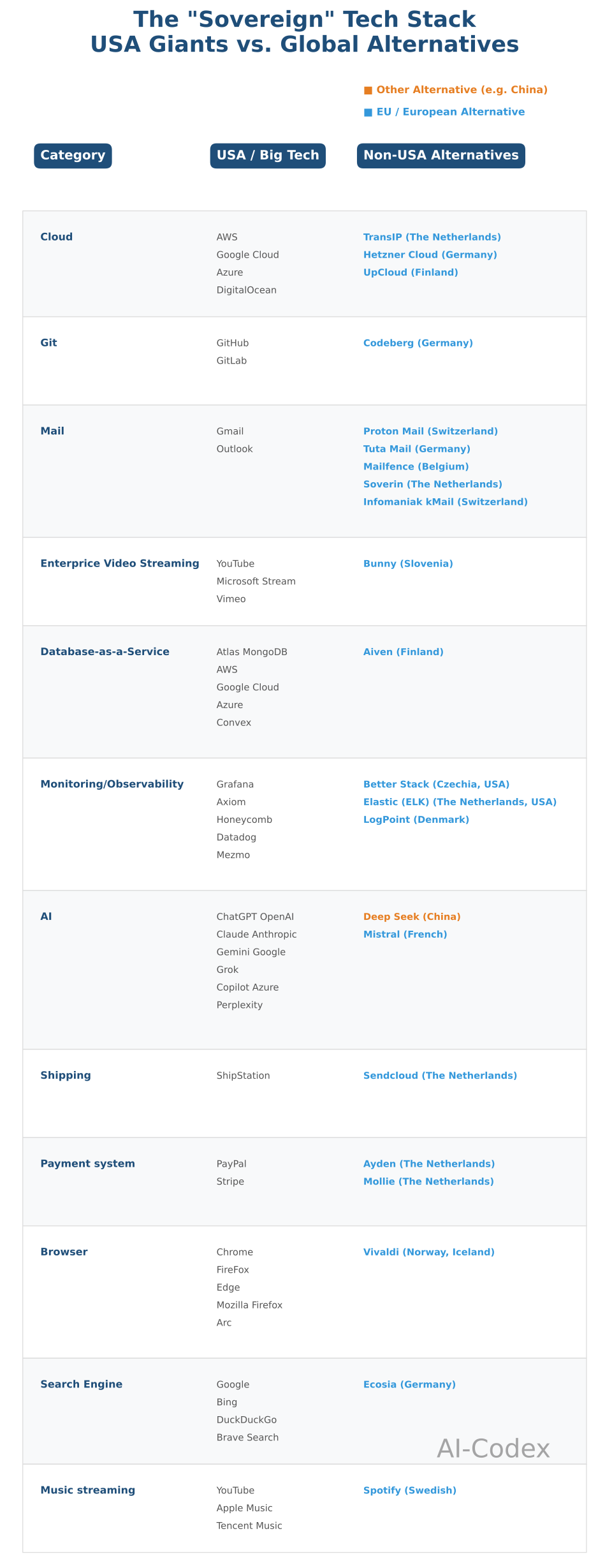
Op basis van huidige marktdata volgt hier een momentopname van waar Europa standhoudt. Hoewel sommige Amerikaanse giganten de leiders blijven, bieden de Europese tegenhangers krachtige, gelokaliseerde oplossingen.
Infrastructuur en productiviteit
Het pad naar digitale soevereiniteit: self-hosting
Om echte digitale soevereiniteit te bereiken stappen veel organisaties over van "Managed USA Services" naar een Self-Hosted Open Source Stack. Door deze tools te hosten op Europese infrastructuur (zoals Hetzner (Duitsland), Scaleway (Frankrijk) of TransIP (Nederland)) behoud je 100% controle over je data en vermijd je vendor lock-in en jurisdictierisico's.
Hieronder een momentopname van toonaangevende open-source modellen en databases die klaar zijn voor self-hosting.
De self-hosted AI- en datastack
Je kunt ook kiezen voor self-hosting. Zo kun je open-source AI-modellen zoals Llama, Mistral of DeepSeek downloaden en op je eigen machine draaien. Op dezelfde manier kun je bij databases de open-source code van PostgreSQL, MySQL of MongoDB gebruiken. En voor Git kun je je eigen GitLab-instance hosten.
Waarom self-hosten?
Hoewel het meer investering in DevOps vereist, biedt self-hosting meerdere cruciale strategische voordelen:
- Data Residency: Je data verlaat nooit je gecontroleerde omgeving, wat strikte naleving van de AVG en de EU AI Act garandeert.
- Voorspelbare kosten: Je elimineert terugkerende "pay-per-token"-kosten en betaalt alleen voor de ruwe Europese infrastructuur.
- Nul tegenpartijrisico: Je bent afgeschermd van plotselinge beleidswijzigingen of buitenlandse handelsbeperkingen die Amerikaanse managed services kunnen verstoren.
- Diepgaande aanpasbaarheid: Open-source weights stellen je in staat om modellen te fine-tunen op je eigen branchespecifieke data (juridisch, medisch of financieel).
Hoe te beginnen
De meeste van deze tools zijn beschikbaar als Docker images, waardoor ze zeer portabel zijn over Europese managed Kubernetes-clusters. Voor een snelle start kun je met tools zoals LangChain, Hugging Face of Ollama modellen als Mistral of DeepSeek met een enkel commando downloaden en draaien. Deze aanpak vereist echter aanzienlijke technische kennis en begrip van de bijbehorende risico's, dus het is niet voor iedereen geschikt.
De balans vinden
De transitie naar een volledig EU-gebaseerde stack gaat niet van de ene op de andere dag gebeuren. Ik zal nog steeds meerdere Amerikaanse diensten gebruiken, omdat ze soms simpelweg de beste tools voor de klus zijn. Maar door bewust Europese alternatieven te integreren (zoals Mistral voor AI of Adyen voor betalingen) ondersteunen we het lokale ecosysteem en bouwen we een veerkrachtiger fundament.
Zoals we bespraken in de context van beveiligingsrisico's zoals prompt injections; het kunnen controleren en begrijpen van de infrastructuur waarop je data leeft is essentieel. Digitale soevereiniteit gaat niet over het bouwen van een muur. Het gaat erom dat we een deur hebben die wij controleren.